Extinct Cuban Street Foods: 8 Flavors We Miss
Discover the 8 Cuban street foods that have disappeared: pirulí, raspadura, frita, pan con lechón and more. A nostalgic journey to the flavors of Cuba.

The 8 most missed Cuban street foods
The pirulí, the raspadura, the granizado, the roasted peanuts, the Cuban frita, the roast pork sandwich, the puffed pork rinds and the fish fritters were the street foods that defined the childhood of generations of Cubans. Today, most have disappeared from the streets of Havana due to economic changes, ingredient shortages and the passage of time. This article is a tribute to those flavors that live in our collective memory.
There was a time when the streets of Cuba smelled of roasted peanuts, of freshly made frita and of fresh sugarcane juice. A time when it was enough to walk a few blocks to find a shaved-ice cart, a street hawker with his cone of peanuts or a timbiriche selling roast pork sandwiches. Those Cuban street foods not only fed the body, but were part of our identity.
Talking with Cubans of different generations, many agree that these street flavors marked their childhood more than any restaurant dish. It was honest, cheap, and delicious food that was enjoyed while walking, unhurried, under the Cuban sun.

1. The Pirulí: the candy we invented ourselves
The pirulí is a Cuban candy shaped like a cone with a stick, made from caramelized cane sugar. It was the most popular street sweet among Cuban children, sold by street hawkers throughout the island. Today it has practically disappeared from the streets of Havana, although it survives in some inland provinces.
Did you know that the pirulí is a 100% Cuban invention? According to historical chronicles, this candy was created in 1862 by José Arechavaleta, a Basque who came to Cuba seeking fortune in the sugar industry. Using the sweet residues from his distillery, he had the idea of pouring hot caramel into paper cones and adding a stick. That’s how the pirulí was born.
The street cry was unmistakable: "Pirulí de La Habana, el que no lo compra, no lo jama". It cost one Cuban peso and was the perfect reward after leaving school. It came wrapped in a little white paper and you had to eat it quickly before it melted under the Cuban sun.
What we miss: That intense cane caramel flavor, the hard texture that left the mark of your teeth, and the excitement of seeing the street vendor approach.

2. Raspadura: older than the Republic
Raspadura is a solid candy made from guarapo (sugarcane juice) boiled until it solidifies in pyramid molds. It was one of Cuba's oldest street sweets, present in parks and children's attractions. It is practically extinct in Havana, although they say it is still possible to find it in Villa Clara.
Its production dates back to the 16th century, when the first sugar mills arrived on the island. Few things in the world are as cloying as raspadura, but every Cuban child loved it. It cost 5 Cuban pesos and you would take a bite that left the perfect mark of your teeth.
Raspadura is as Cuban as the palm trees. For more than 300 years it was part of the island's street scenery, sold by street vendors on any busy corner.
What we miss: That extreme sweetness that only concentrated guarapo can give, and the feeling of biting something so hard it seemed indestructible.

3. The Granizado: the salvation of the endless summer
The Cuban granizado is shaved ice drenched in colorful syrups (strawberry, lime, tamarind), served in small cups or cardboard cones. It was the most refreshing street drink in Cuba, sold from mobile carts with bottles of bright colors. Although it still exists, it is no longer as common as it used to be.
On an island where summer seems to last all year, the granizado was the salvation. Those carts with brightly colored bottles —red, green, yellow— were like a mobile oasis in the hot streets of Cuba.
The process was simple but magical: with a soda cap, the vendor filled a plastic cup (or a cardboard cone if the cart wasn't so "glamorous") with little pieces of ice and poured the syrup of whatever flavor you asked for. If you got the cardboard cone, you had to drink it quickly before the container fell apart. It was part of the adventure.
What we miss: That explosion of cold and sweet at midday in Havana, and the race against time to finish it before it all melted.

4. Roasted Peanuts: Cuba's Most Famous Street Cry
Street roasted peanuts were sold in paper cones, freshly roasted and warm, by hawkers who called out across the island. Their cry "¡Maní, maníiii!" was immortalized in Moisés Simons's song that traveled the world. Although the vendors have declined, peanuts remain part of our culture.
Peanut sellers were part of the Cuban urban landscape. Peanuts were sold at bus stops, in parks, outside cinemas, and on any busy corner. The smell of peanuts roasting was unmistakable and the taste, addictive.
Many Cubans learned to make peanut nougat at home precisely because we missed that street flavor. Cuban peanut nougat is one of the ways we keep that tradition alive, recreating in our kitchens what we once found on every corner.
What we miss: The warmth of the paper cone in our hands, the crunch of freshly roasted peanuts, and that cry that was music to the ears.

5. The Cuban Frita: the queen of street food
The Cuban frita is a Creole-style burger made with seasoned ground beef, served on a soft bun with French fries on top and a special sauce. It was the most popular street food in Havana, sold at stalls that were as important to the neighborhood as the bodega. Today it's hard to find a traditional frita stand in Cuba.
Its origin, according to historical research, is attributed to Sebastián Carro Seijido, a Galician coal vendor who, seeing that liquefied gas was replacing coal, decided to reinvent himself. He set up a frita stand on Zapata and A, in Vedado, and the success was immediate. Soon, the phrase "I didn't even earn enough for a frita" replaced the old saying "I didn't even earn enough for gum."
Jorge Mañach wrote in his Estampas de San Cristóbal that the frita stands were an inseparable part of Havana's image, contributing to the capital's characteristic smell along with coffee and fruit.
At RecetaCubana we have tried to recreate the original Cuban frita, and although the result is delicious, there is something about eating it on the street, freshly made, that cannot be completely replicated at home.
What we miss: That Creole-style burger with its French fries on top, the soft bun and the special sauce that each frita vendor prepared in his own way.

6. The Pan con Lechón: the most Cuban sandwich
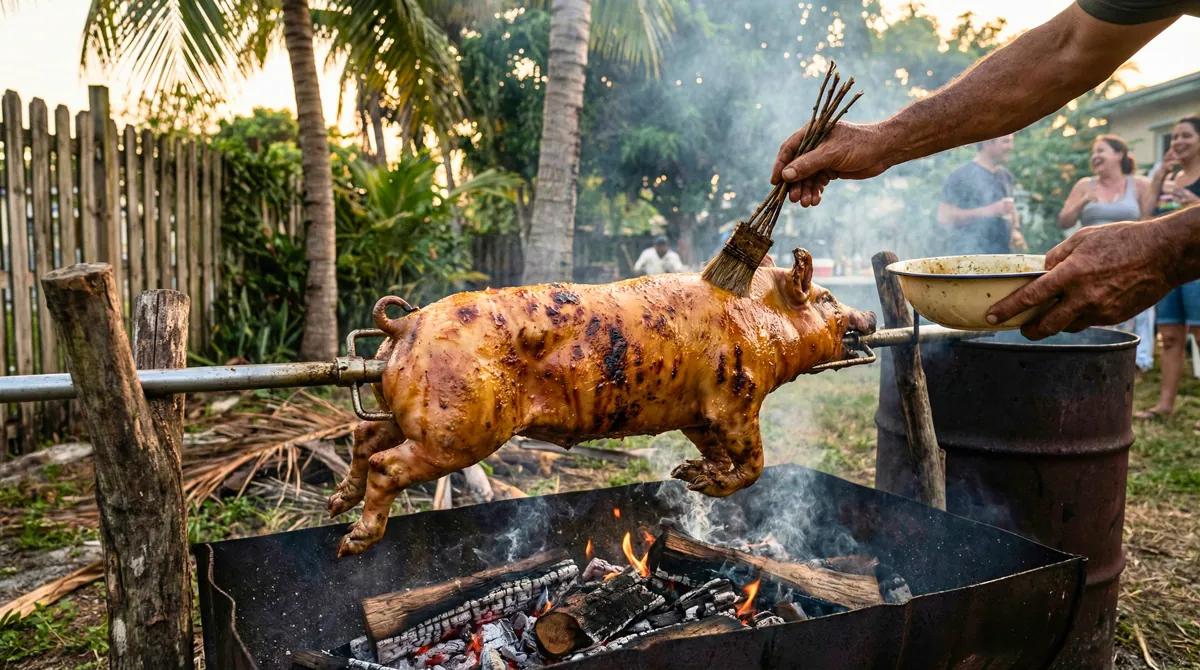
Pan con lechón is a fresh bread sandwich filled with roasted pork with its crispy crackling, seasoning and salad. It was Cuba's heartiest street food, prepared on the spot in "timbirichis" all over the island. Although lechón is still king at parties, finding a good street pan con lechón has become difficult.
Of all the traditional Cuban sandwiches, pan con lechón is perhaps the most ours. They made it right in front of you: fresh bread, juicy lechón with its crispy crackling, a good seasoning and salad. Simple, hearty, perfect.
Pan con lechón was the workers' fuel, the reward after a long walk and the midnight craving. You found it especially during party season, when roasted pork was left over and everything had to be used. If you want to learn all the secrets of Cuban roast pork, we have a full article dedicated to this king of the parties.
What we miss: The lechón juices running down your hands, the contrast between the soft bread and the crispy crackling, and that taste of mojo that penetrated every bite.

7. Wind Pork Rinds: crispy and addictive
Wind pork rinds are pig skin fried until puffed, without meat or fat, becoming like crunchy, light clouds. They were sold in paper cones on street corners, in parks and at public events. Unlike traditional year-end pork rinds, these were drier and lighter.
Do not confuse these with the pork rinds from year-end parties. Wind pork rinds are different: drier, without batter, pure and crunchy. They were made by frying the pig skin until it puffed and became like a crunchy cloud.
They were the perfect snack: light, salty and tremendously addictive. Once you started, you couldn't stop. The Cuban chiviricos, those crispy flour sweets that were also sold on the streets, shared that spirit of an "irresistible street snack."
What we miss: That satisfying crunch, the coarse salt on the lips and the lightness of eating something that seemed like fried air.

8. Fish Minutas: taste of the Cuban coast
The minuta is a breaded and fried fish fillet, served inside a roll with lime and salt. It was the typical street food of Cuban coastal towns, sold near docks and beaches. For those who grew up inland, minutas were a beach vacation luxury.
Minuta vendors set up near docks and beaches, where the fish arrived fresh each morning. The smell of frying and sea mixed to create an aroma that any Cuban from the coast recognizes instantly.
Going to the beach and eating a minuta was part of the summer ritual, as important as a dip in the sea. It was honest food: fresh fish of the day, crispy breading, and the taste of lime cutting through the fat.
What we miss: The taste of fresh fish, the crunch of the breading, and that holiday feeling that came with every bite.
Why did these street foods disappear?
The reasons are several: economic changes, ingredient shortages, regulations and simply the passage of time. Many of the street vendors who kept these traditions alive could not continue, and with them went their recipes and their calls.
| Food | Main reason for disappearance | Can it be recreated at home? | Where is it still found? |
|---|---|---|---|
| Pirulí | Sugar shortage, lack of vendors | Yes, easy | Inland provinces |
| Raspadura | Closure of sugar mills | Difficult (requires guarapo) | Villa Clara, rural areas |
| Granizado | Shortage of ice and syrups | Yes, with homemade syrups | Some cities, very limited |
| Roasted peanuts | Reduction of street vendors | Yes, easy | Still exists, less common |
| Cuban frita | Closure of private stands | Yes, easy | Miami, very rare in Cuba |
| Pork sandwich | Pork shortage | Yes, when roast pork is available | Festival times |
| Puffy chicharrones | Pork shortage | Yes, easy | Very rare |
| Fish snacks | Fishing restrictions | Yes, with available fish | Coastal areas, limited |
But memory persists. In the kitchens of Cuban emigrants, in nostalgic restaurants in Miami, Madrid and other cities, these foods remain alive.
Some of these preparations you can recreate at home: the chiviricos, the taro fritters, the peanut nougat, the milk creams, the stuffed potatoes. It won't be exactly the same as buying them on the street under the Cuban sun, but the flavor will be the same one you keep in your memory.
Keep the Tradition Alive
In the RecetaCubana app you'll find many of the recipes that inspired these street foods. From chiviricos to peanut nougat, including fried treats and traditional sweets that connect us to our childhood.
- ✅ +145 authentic Cuban recipes
- ✅ Traditional sweets and fried treats
- ✅ Step-by-step videos
- ✅ Community of 640,000+ Cubans
Access the Official RecetaCubana App 🇨🇺
Frequently asked questions about Cuban street food
Can these foods still be found in Cuba?
What was the most popular street food in Cuba?
Why is the pirulí considered a Cuban invention?
How can you recreate at home the Cuban street foods that no longer exist?
What is the difference between "chicharrones de viento" and regular chicharrones?
Which street foods do Cuban emigrants remember most?
Why was street food so important in Cuba?
Which of these strange street foods do you miss the most? Do you remember any others that we didn't mention? Tell us in the comments and share this article with other Cubans who surely also have these flavors stored in their memories.
#CubanStreetFoods #CubanNostalgia #CubanFood #FlavorsOfCuba #CubanRecipes