Mojo Criollo: The Two Secrets Every Cuban Must Know
Learn the difference between the two Cuban mojos: a marinade with bitter orange for meats and a sauce with lime for starchy side dishes. The secret that few people know.

In short: Creole mojo is the soul of Cuban cuisine, but there is something few people know: in Cuba there are TWO types of mojo with completely different uses. The first, for seasoning meats, contains bitter orange, cumin and oregano. The second, for drizzling over yuca and root vegetables, uses lime and garlic without spices. Confusing them is the most common mistake outside the island.
The aroma that connects us to home
Close your eyes for a moment. Imagine the sound of garlic sizzling in hot oil. That unmistakable aroma that used to fill your grandmother’s kitchen when she prepared yuca or marinated the pork for Christmas Eve.
That is mojo criollo.
It doesn’t matter if you’re in Miami, Madrid or Milan. That smell has the power to transport you instantly to Cuba. To make you feel, even for a moment, like you’re at home.
Mojo is probably the most important preparation in our cuisine. Without it, the roast pork wouldn’t be roast pork. Yuca would be just another side dish. And the pork chunks would lose their reason for being.
But here’s the interesting part: most of the recipes you find on the internet mix two completely different preparations. And that, for a true Cuban, is almost a sacrilege.

From the Canary Islands to our tables
Mojo is a sauce of Canarian origin that arrived in Cuba during the colonial era and became a fundamental pillar of our cuisine. The word comes from the Portuguese "molho", which simply means sauce, and the Spanish colonizers —especially the Canarians— brought this culinary tradition with them.
In the Canary Islands mojos of all kinds are still made today: red mojo picón, green cilantro mojo, almond mojo. Each island, each family, has its own version.
But when mojo crossed the Atlantic and arrived in Cuba, something magical happened. It met the bitter orange, a citrus that grew abundantly on the island, and that union changed everything.
Cuban mojo became something unique. Neither better nor worse than the Canarian, simply different. Ours. With that acidic and aromatic touch that only bitter orange can give.

The two Cuban mojos: the secret few know
In Cuba there are two distinct mojo preparations with completely different ingredients and uses: one for marinating meats cold and another as a hot sauce for viandas. This difference is fundamental in traditional Cuban cooking, but outside the island they are constantly confused. After collecting recipes from Cuban grandmothers on the island and in the diaspora, this is the distinction that marks the difference between a good dish and an extraordinary one.
Mojo for seasoning (marinade)
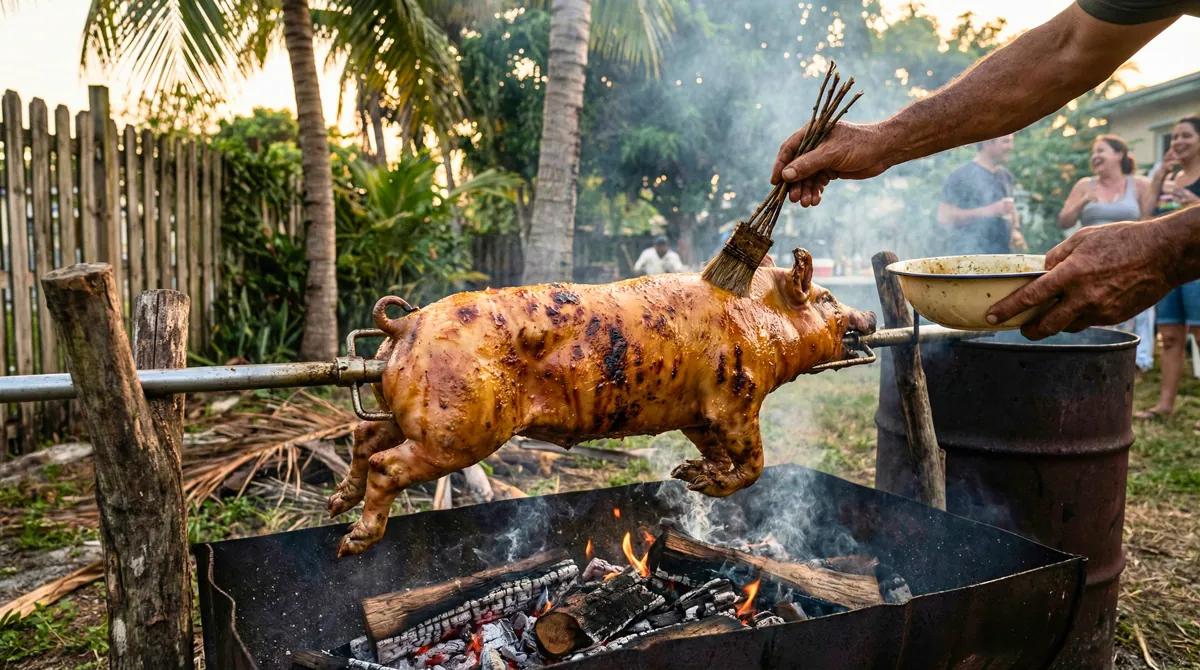
The mojo for seasoning is a cold preparation used to marinate meats before cooking. It is the star of the lechón asado, of the roast pork in casserole and of the chicken in mojo. Its function is to penetrate the meat for hours, adding deep flavor and helping to tenderize it.
Its key ingredients:
- Bitter orange (star ingredient)
- Crushed garlic in abundance
- Ground cumin
- Dried oregano
- Salt
- Sweet pepper (optional, but traditional)
- Olive or vegetable oil
This mojo is prepared by mixing all the ingredients without cooking and letting it rest at least 30 minutes so the flavors integrate. Then it is used to baste the meat and let it marinate for hours, ideally overnight.
Cumin and oregano are fundamental here. They give that characteristic aroma we associate with Cuban roast pork.
Mojo as a sauce (for viandas)
The mojo for viandas is a completely different hot sauce that is poured over yuca, malanga, tostones or any tuber. Unlike the mojo for seasoning, this one is cooked and served immediately.
Its key ingredients:
- Lemon (NOT bitter orange)
- Garlic in abundance
- Onion cut into strips
- Very hot oil
- Salt
And here comes the important part: this mojo does NOT contain cumin or oregano. No spices. Just the pure flavor of garlic browned in hot oil with the acidic touch of lemon.
The technique is also different. The garlic is browned in hot oil, the onion is added, and at the end the lemon is added. That sizzle when the citrus hits the hot oil is music to the ears of any Cuban.

Bitter orange: the ingredient that defines us
Bitter orange (Citrus aurantium) is the citrus that defines the flavor of Cuban mojo for marinating. Its juice has a particular acidity, milder than lemon but more intense than sweet orange, with unique aromatic notes that no other citrus can exactly replicate.
In Cuba, bitter orange was so common that no one paid it much attention. There were trees in almost every yard. It was used for everything: mojo, beans, chicken, even as home remedies.
But times have changed. Even in Cuba it has become hard to find. And outside the island, finding it can be quite an odyssey.
Where to get bitter orange depending on where you live
In Miami and South Florida:
It's easy for you. In any Latin supermarket, at Sedano's, at Publix in Cuban neighborhoods, you'll find fresh bitter orange or bottled juice from brands like Goya or Badia.
In Spain — The best kept secret:
Here comes something very few Cubans in Spain know: bitter orange is everywhere. Literally.
In the Valencian Community, Seville, Murcia and many other Spanish cities, sour orange trees (which are exactly the same as our bitter orange) are used as ornamental trees in streets and squares.
Spaniards do not have the habit of consuming it. For them they are just decorative trees. But for us, Cubans, they are a hidden treasure in plain sight.
The next time you walk through Valencia or Seville in orange season (winter), look up. Those oranges that nobody picks are the same ones your grandmother used for mojo.

In the rest of Europe and places where you can't find it:
The classic solution is to prepare a substitute by mixing 3 parts sweet orange juice with 1 part lemon juice. It's not exactly the same, but it's pretty close. Some add a teaspoon of white vinegar to increase the acidity.
The mojo on our Christmas Eve table
There is no Cuban Christmas Eve without mojo. It is impossible to imagine the roast pork without that seasoning that penetrates the meat and gives it its characteristic flavor.
At this time of year, mojo takes on a special importance. It is the common thread that ties all the dishes of the dinner together: the marinated pork, yuca with mojo, and some even use it to give the final touch to congrí.
For many Cuban expats, preparing mojo on Christmas Eve is an act of cultural resistance. A way of saying, "We are far away, but we are still Cuban."
Common mistakes when preparing mojo
These are the most frequent mistakes that explain why mojo "doesn't taste like Cuba" when you make it outside the island. At RecetaCubana we have tried dozens of variants and these confusions appear again and again:
1. Using bitter orange for yuca mojo
Wrong. The mojo for root vegetables uses lemon, not bitter orange. Bitter orange is for marinating meats.
2. Adding cumin and oregano to yuca mojo
Another very common mistake. Those spices are exclusive to the marinating mojo, not for the root vegetable sauce.
3. Not letting the marinating mojo rest
The mojo for marinating needs time. At least 30 minutes, ideally several hours or overnight. The flavors need to integrate before applying it to the meat.
4. Burning the garlic in the sauce mojo
The garlic should be browned to a light golden color, never black. If it burns, it makes the whole mojo bitter and ruins the dish. Medium heat and patience.
5. Adding the lemon with the oil too hot
Be careful with splattering. The oil should be hot but not smoking when you add the citrus. If it is smoking, let it cool for a few seconds.
Frequently asked questions about Cuban criollo mojo
Take the flavor of Cuba with you
Mojo is just the beginning. In our app you'll find the authentic mojo criollo recipe with a step-by-step video, plus more than 145 traditional Cuban recipes explained in detail.
Join Our Little Cuban Corner →Because cooking Cuban is not just following a recipe. It's keeping a tradition, a memory, an identity alive. And that, wherever you are, no one can take away from you.